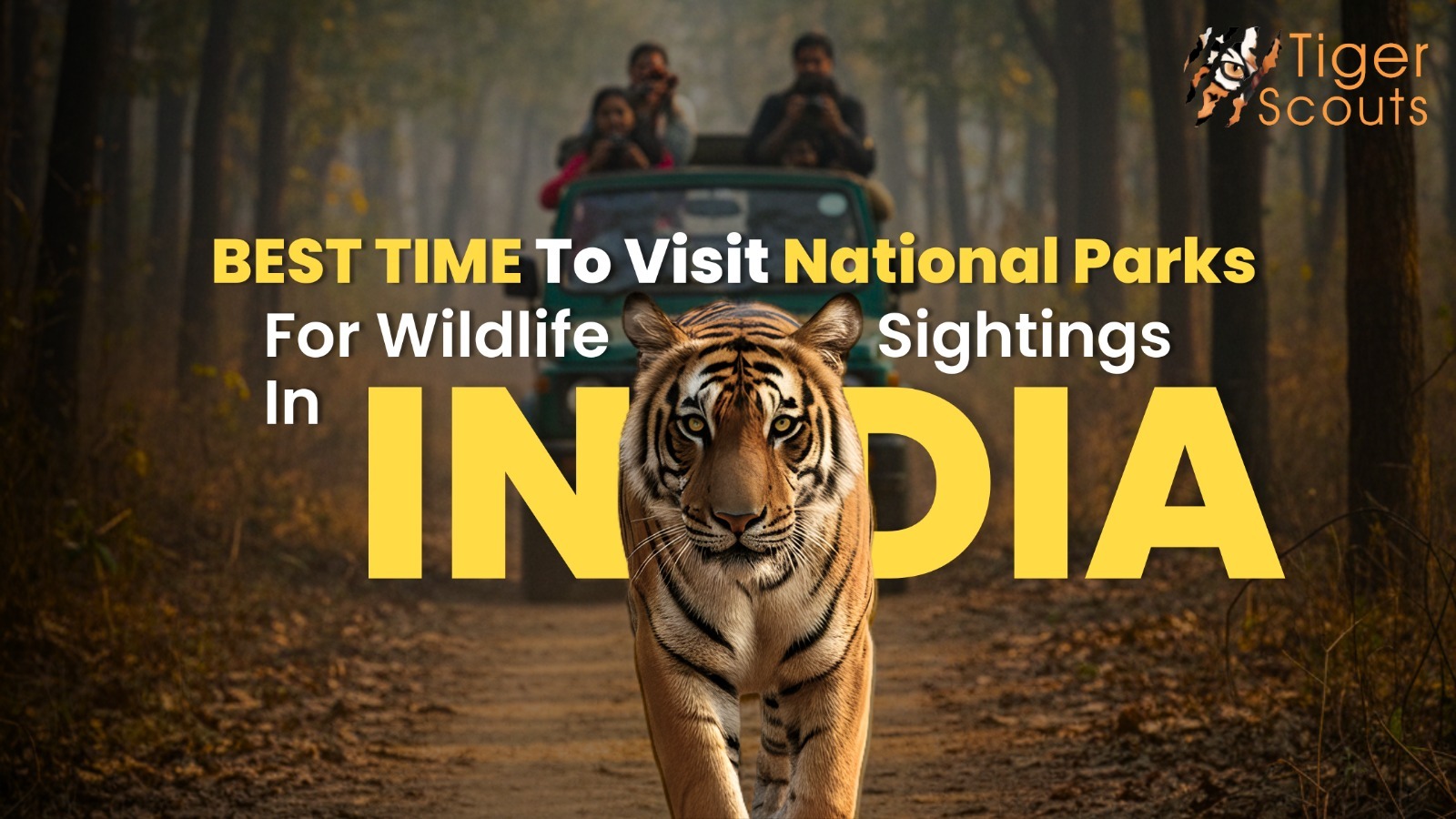
India is a land of extraordinary biodiversity, vast forest landscapes, and unique ecosystems that host some of the planet’s most iconic wildlife species. For travellers who dream of close encounters with majestic tigers, vibrant birdlife, and rare mammals, choosing the best time to visit national parks in India is essential. Wildlife behaviour is influenced by seasonal changes, temperature, food availability, and breeding cycles, making certain months far more rewarding for wildlife sightings.
This TIGER SCOUTS Guide is designed to help wildlife lovers plan the perfect safari, understand peak tiger sighting season in India, identify the best months for bird watching, and learn how weather patterns enhance wildlife activity in India. Whether you’re a first-time traveller or an experienced naturalist, this guide brings expert insights, field-tested wisdom, and actionable safari tips to help you make the most of your adventure.
Best Seasons for Wildlife Sightings in India’s National Parks
India’s wildlife viewing opportunities fluctuate significantly across seasons. Understanding these seasonal cycles helps safari-goers select the ideal month for sightings, photography, and safari experiences.
Dry Season (February to June)
This period is widely regarded as the best time to visit national parks in India. As water sources shrink and temperatures rise, animals gather near rivers, ponds, and man-made waterholes, increasing visibility.
Why the Dry Season Offers Better Sightings
- Sparse vegetation improves line of sight
- Higher concentration of wildlife around limited water sources
- Increased movement of predators like tigers, leopards, and wild dogs
- Ideal conditions for wildlife photography
Post-Monsoon Season (October to December)
The forests rejuvenate after the rains, offering lush landscapes and mild weather. Though dense foliage can make spotting difficult, this season is excellent for bird watchers, herbivore sightings, and scenic safaris.
Monsoon Season (July to September)
Many parks close during the monsoon due to safety concerns and breeding activity. However, Western Ghats sanctuaries and birding reserves remain partially accessible.
Top National Parks in India for Tiger Spotting
India shelters more than 70% of the world’s tigers, making it a dream destination for wildlife lovers and big-cat photographers. If you’re planning a safari during the tiger sighting season in India, choosing the right national park can make all the difference. Here are the top tiger reserves known for frequent sightings, rich landscapes, and unforgettable jungle experiences.
Ranthambore National Park
Why Visit: Famous for its bold, camera-friendly tigers, Ranthambore is ideal for first-time safari-goers. Its dry deciduous forest, ancient fort ruins, and open terrain make spotting tigers easier.
Best Time: March to June
Jim Corbett National Park, Uttarakhand
Why Visit: India’s oldest national park is known for its rich biodiversity and varied landscapes from riverine belts to dense forests. Corbett is a paradise for wildlife photographers and birdwatchers.
Best Time: November to June
Bandhavgarh National Park, Madhya Pradesh
Why Visit: Renowned for having the highest tiger density in India, Bandhavgarh offers exceptional chances of spotting tigers in their natural habitat. The rocky hills and dense forests add to the adventure.
Best Time: February to June
Tadoba-Andhari Tiger Reserve, Maharashtra
Why Visit: Tadoba is famous for consistent tiger sightings, open landscapes, and beautiful teak forests. It has become one of the most reliable reserves for tiger photography.
Best Time: March to May
Kanha National Park, Madhya Pradesh
Why Visit: Known for its lush meadows, sal forests, and excellent visibility, Kanha offers a classic Indian jungle experience. It is also home to the rare hard-ground barasingha.
Best Time: February to April
Ideal Months for Bird Watching in India’s Wildlife Sanctuaries
Birdwatchers flock to India during the winter season when thousands of migratory species arrive from Central Asia, Siberia, and Europe.
Winter Birding Season (November to February)
This is considered the best bird-watching season in India, with pleasant weather, active breeding behaviour, and abundant sightings across wetlands, grasslands, and forests.
Popular Birding Destinations in India
Sanctuaries to Explore:
- Bharatpur Bird Sanctuary (Keoladeo National Park)
- Ranganathittu Bird Sanctuary
- Sultanpur National Park
- Chilika Lake Wetlands
- Thattekad Bird Sanctuary
Bird Species Commonly Seen:
- Painted storks
- Bar-headed geese
- Spoonbills
- Flamingos
- Kingfishers
- Raptors such as eagles and harriers
Weather Conditions That Improve Wildlife Activity in India
Understanding how weather influences wildlife behaviour helps travellers predict the best time to visit national parks in India with accuracy.
Temperature
- Cooler temperatures more diurnal movement
- Hotter temperatures, wildlife congregates at water sources
Humidity & Rainfall
- Post-monsoon: excellent landscapes but limited visibility
- Pre-monsoon: high predator activity
Wind Conditions
- Calm mornings ideal for spotting herbivores and predators
- Strong winds often lead to reduced wildlife movement
Water Availability
- Low water: high concentration of sightings
- High water: dispersed wildlife activity
TIGER SCOUTS Expert Tips for Planning the Perfect Wildlife Trip
As seasoned explorers, TIGER SCOUTS brings years of field expertise to help travellers elevate their wildlife experiences.
Plan Safaris During Early Morning & Late Afternoon
These periods offer the highest chances of wildlife sightings due to optimal temperature and natural movement patterns.
Choose Experienced Naturalists & Guides
Experts with local knowledge dramatically increase your chances of spotting rare species.
Pick Zones Known for Recent Sightings
Zone-based tracking improves the probability of encountering tigers and other big cats.
Pack the Right Gear
- Binoculars
- Layered clothing
- Reusable water bottle
- DSLR or mirrorless camera
Stay for at Least 3–4 Safaris
More safaris mean higher chances of seeing tigers and other elusive species.
Safety Measures & Photography Tips for Wildlife Safari Visitors
Essential Safety Guidelines
Respecting wildlife and following park rules ensures a safe, memorable experience.
Safety Measures to Follow
- Stay inside the vehicle at all times
- Avoid loud conversations
- Do not feed animals
- Keep hands and cameras within the jeep
- Follow instructions from the guide
Wildlife Photography Tips
- Use a telephoto lens for distant subjects
- Prioritize natural light during early golden hours
- Keep the camera in burst mode for action shots
- Maintain silence to avoid disturbing wildlife
- Stay patient, great shots often require waiting
Conclusion
India’s diverse national parks offer unparalleled opportunities for wildlife sightings, tiger encounters, and unforgettable safari moments. By selecting the best time to visit national parks in India, understanding seasonal wildlife patterns, and following TIGER SCOUTS’ expert tips, travellers can enjoy a rewarding and responsible wildlife adventure. Whether your goal is spotting a Royal Bengal tiger, capturing rare bird species, or experiencing the thrill of India’s wilderness, the right timing and planning make all the difference.