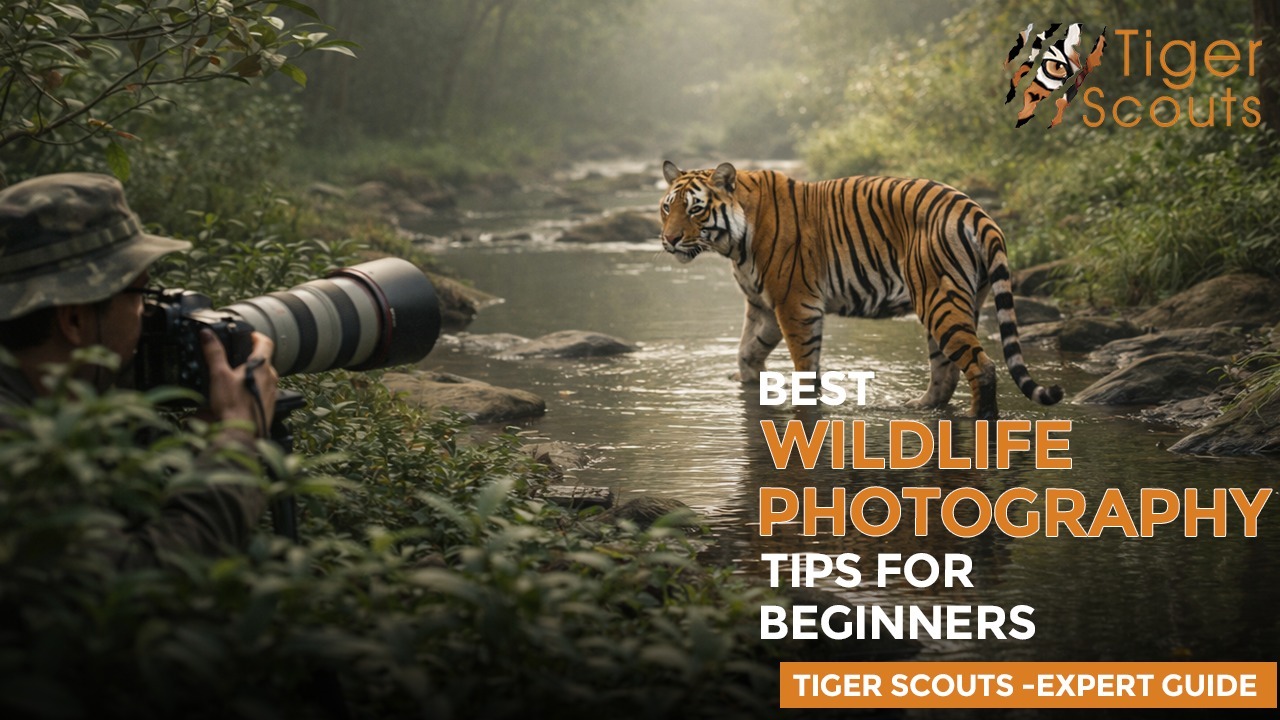
Wildlife photography is more than just clicking pictures of animals it is about patience, observation, respect for nature, and mastering the right techniques. For beginners, stepping into the world of wildlife photography can feel overwhelming due to equipment choices, camera settings, and unpredictable animal behavior. This TIGER SCOUTS Expert Guide is designed to simplify everything and help you confidently begin your journey with practical, field-tested advice.
Wildlife photography basics for beginners start with understanding nature before understanding the camera. Unlike studio or portrait photography, wildlife photography demands quick decision-making, long waiting hours, and ethical responsibility. This guide covers beginner wildlife photography tips , camera selection, settings, composition, animal tracking, and safety guidelines, helping you learn how to start wildlife photography the right way.
Understanding Wildlife Photography Basics for Beginners
Wildlife photography is about capturing animals in their natural habitat without disturbing them. Beginners must first focus on field awareness rather than gear obsession.
What Makes Wildlife Photography Unique
Wild animals do not pose or wait for perfect lighting. You must adapt to their movement, environment, and behavior while staying alert at all times.
Key Wildlife Photography Basics
- Understanding light direction and quality
- Learning animal movement patterns
- Developing patience and observation skills
- Practicing silent movement in forests
- Shoot for experience, not perfection
- Accept missed shots as learning moments
- Focus on one species at a time
Mastering wildlife photography basics for beginners builds a strong foundation before investing heavily in equipment.
Choosing the Best Camera and Lens for Wildlife Photography
Selecting the best camera for wildlife photography beginners depends on budget, ease of use, and performance in challenging conditions.
DSLR vs Mirrorless for Wildlife Photography
Both systems work well, but beginners should understand the difference.
DSLR Advantages
- Longer battery life
- Strong autofocus for moving subjects
- Affordable lens availability
Mirrorless Advantages
- Lightweight and compact
- Silent shooting mode
- Advanced eye and animal tracking
Best Lens for Wildlife Photography
A telephoto lens is essential to maintain safe distance.
Recommended Lens Range
- 200–500mm for mammals
- 300–600mm for birds
- Image stabilization for handheld shooting
The right camera and the best lens for wildlife photography allow beginners to focus on learning techniques instead of struggling with limitations.
Essential Camera Settings for Stunning Wildlife Photos
Understanding wildlife photography camera settings is critical when animals move quickly and lighting changes constantly.
Basic Settings Every Beginner Must Know
Camera Setting Guidelines
- Shutter Priority or Manual Mode
- Continuous autofocus (AF-C / AI Servo)
- High-speed continuous shooting
Burst Mode Wildlife Photography
- Capture action sequences
- Increase chances of sharp images
- Ideal for birds in flight and predators
Exposure Control Tips
- Use fast shutter speeds (1/1000 or higher)
- Adjust ISO for low-light forests
- Keep aperture wide for subject separation
Proper wildlife photography camera settings reduce blur and ensure clarity even during fast movements.
How to Track Animal Behavior for Better Wildlife Shots
Understanding wildlife photography animal behavior separates beginners from skilled photographers.
Importance of Animal Behavior Knowledge
Animals follow daily routines feeding, resting, and hunting, which can be predicted with observation.
Animal Tracking for Wildlife Photography
Signs to Watch
- Fresh footprints and droppings
- Alarm calls of birds
- Movement patterns near water sources
Behavior-Based Shot Planning
- Anticipate movement direction
- Pre-focus on action zones
- Wait for eye contact moments
Learning animal tracking for wildlife photography increases your success rate dramatically without disturbing wildlife.
Wildlife Photography Composition Techniques Used by Experts
Strong composition turns ordinary photos into powerful visual stories.
Wildlife Photography Composition Tips
Rule of Thirds Wildlife Photography
- Place subject off-center
- Leave space in movement direction
- Create visual balance
Advanced Composition Ideas
- Use natural frames (trees, grass)
- Shoot at eye level for intimacy
- Include habitat for storytelling
Background and Depth Control
- Avoid cluttered backgrounds
- Use wide apertures for background blur
- Separate subject using light contrast
Applying wildlife photography composition tips enhances emotional connection and storytelling.
Ethical and Safety Guidelines in Wildlife Photography
Ethics are the backbone of responsible photography.
Ethical Wildlife Photography Tips
Ethical Rules to Follow
- Never feed or bait animals
- Maintain safe distance
- Avoid flash at night
Responsible Photographer Behavior
- Respect park rules
- Do not disturb nesting animals
- Prioritize animal safety over photos
Safety Tips for Beginners
- Never step out of safari vehicles
- Stay alert in forest zones
- Follow guide instructions strictly
Ethical wildlife photography tips protect both the photographer and the animals.
Conclusion
Wildlife photography is a lifelong learning journey that rewards patience, respect, and consistency. By mastering wildlife photography basics for beginners, choosing the right gear, understanding camera settings, observing animal behavior, applying strong composition, and following ethical guidelines, you can grow confidently as a wildlife photographer. With guidance from TIGER SCOUTS, beginners can build skills that not only create stunning images but also promote conservation and responsible storytelling.