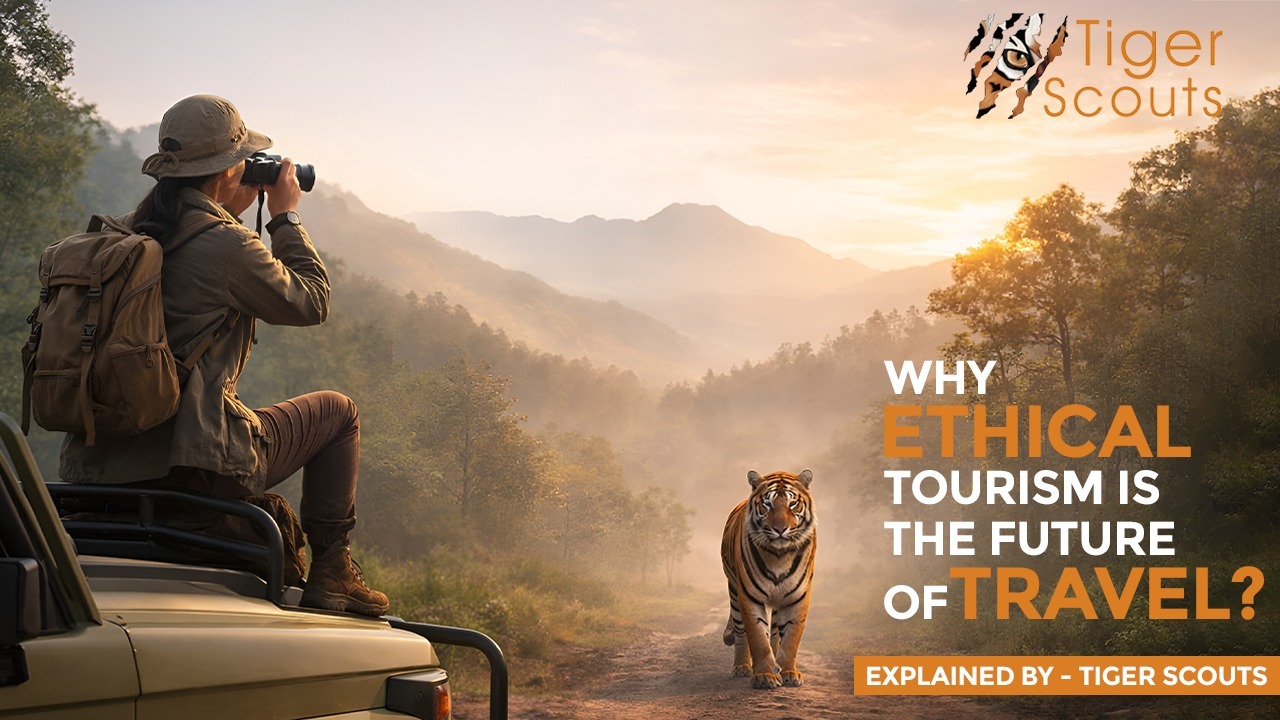
Travel is no longer just about visiting destinations it is about how we travel, why we travel, and the impact we leave behind. In a world facing climate change, wildlife loss, and cultural erosion, ethical tourism has emerged as the future of travel. Travelers today are choosing responsible travel over mass tourism, eco-friendly tourism over exploitative practices, and meaningful travel experiences over rushed itineraries.
At TIGER SCOUTS, we believe ethical tourism is not a trend it is a responsibility. Through ethical wildlife safaris, responsible safari tourism, and wildlife conservation tourism, we ensure every journey protects nature, respects communities, and supports conservation. This guide explains why ethical tourism is the future of travel and how conscious travelers can make a difference.
What Is Ethical Tourism and Why It Matters Today
Ethical tourism refers to travel that prioritizes people, wildlife, culture, and the environment over profit. It focuses on minimizing harm while maximizing positive impact through responsible travel choices.
Unlike conventional tourism, ethical tourism encourages travelers to engage in sustainable travel, support local livelihoods, and protect natural ecosystems. As tourism grows globally, unethical practices are damaging wildlife habitats, displacing communities, and degrading fragile ecosystems.
Key Principles of Ethical Tourism
Ethical tourism operates on a foundation of accountability and respect.
Core Values of Responsible Travel
- Protecting wildlife and natural habitats
- Supporting local communities and economies
- Preserving culture and heritage
- Reducing environmental footprint
- Promoting education and awareness
Ethical tourism matters today because travel has power. Every ethical choice shapes the future of destinations, wildlife, and people.
How Ethical Tourism Supports Wildlife Conservation and Local Communities
Wildlife conservation tourism plays a crucial role in protecting endangered species and fragile ecosystems. When travelers choose ethical wildlife travel, their money directly supports conservation initiatives and community development.
At TIGER SCOUTS, ethical tourism ensures that wildlife is observed respectfully, without exploitation or disturbance.
Impact of Ethical Wildlife Travel
Ethical tourism creates long-term benefits rather than short-term profit.
Benefits for Wildlife Conservation
- Habitat protection and restoration
- Supporting local communities and economies
- Anti-poaching initiatives
- Ethical wildlife safaris without animal exploitation
- Conservation research funding
How Ethical Tourism Helps Wildlife
- Reduces human-wildlife conflict
- Prevents animal captivity tourism
- Supports national parks and reserves
- Encourages ethical wildlife observation
Community Benefits of Responsible Wildlife Tours
- Employment for local guides and trackers
- Revenue for conservation villages
- Cultural preservation through local involvement
Responsible wildlife tours ensure conservation becomes a shared responsibility between travelers and communities.
The Role of Sustainable Travel in Protecting Nature and Culture
Sustainable travel is a core pillar of ethical tourism. It focuses on reducing environmental impact while preserving cultural identity. Eco-friendly tourism ensures that future generations can experience the same landscapes, wildlife, and traditions.
Why Sustainable Travel Matters
Mass tourism often damages ecosystems and dilutes cultural heritage. Ethical tourism promotes cultural preservation travel by respecting traditions and local customs.
Key Elements of Eco-Friendly Tourism
- Low-impact accommodations
- Waste reduction practices
- Renewable energy use
- Water conservation
Cultural Preservation Through Ethical Tourism
- Respecting indigenous traditions
- Supporting local artisans
- Avoiding cultural exploitation
Environmental Benefits of Sustainable Travel
- Lower carbon footprint
- Protection of biodiversity
- Conservation of natural resources
Ethical tourism ensures nature and culture remain intact, not commercialized.
Why Ethical Wildlife Safaris Are Replacing Mass Tourism
Traditional safaris often prioritize volume over value. In contrast, ethical wildlife safaris focus on conservation, education, and respect. Travelers now prefer responsible safari tourism that aligns with ethical values.
The Shift Toward Ethical Safari Experiences
Modern travelers are rejecting overcrowded safari circuits in favor of intimate, ethical experiences.
What Makes a Safari Ethical
- Limited vehicle numbers
- Trained naturalist guides
- No animal baiting or disturbance
- Support for conservation projects
Benefits of Ethical Wildlife Safaris
- Authentic wildlife encounters
- Educational experiences
- Conservation funding
Why Responsible Safari Tourism Matters
- Protects animal behavior
- Maintains ecosystem balance
- Supports ethical tourism India
At TIGER SCOUTS safaris, ethical wildlife experiences always come before commercial gain.
How Ethical Tourism Creates Meaningful Travel Experiences for Tourists
Ethical tourism transforms travel into a purpose-driven journey. Meaningful travel experiences go beyond sightseeing to create emotional and educational connections.
The Rise of Conscious Travel and Slow Tourism
Conscious travel encourages travelers to slow down, connect deeply, and travel intentionally. Slow tourism allows visitors to truly understand a destination.
Why Ethical Tourism Feels More Rewarding
- Deeper cultural immersion
- Authentic local interactions
- Greater personal fulfillment
Emotional Benefits of Ethical Travel
- Stronger connection with nature
- Sense of contribution
- Mindful travel satisfaction
Why Travelers Prefer Ethical Experiences
- Purpose-driven journeys
- Educational value
- Lasting memories
Ethical tourism turns travel into transformation.
Why TIGER SCOUTS Promotes Ethical Tourism for the Future of Travel
At TIGER SCOUTS, ethical tourism is the foundation of every journey we design. We specialize in ethical tourism India, offering responsible wildlife tours that protect nature while delivering unforgettable experiences.
Our Commitment to Ethical Wildlife Travel
We work closely with conservationists, forest departments, and local communities.
How TIGER SCOUTS Safaris Follow Ethical Principles
- Wildlife-first safari planning
- Conservation-approved routes
- Community-led tourism initiatives
What Sets TIGER SCOUTS Apart
- Ethical wildlife safaris only
- Trained naturalists
- Conservation-focused itineraries
Our Vision for the Future of Travel
- Protect wildlife habitats
- Empower local communities
- Promote responsible travel worldwide
We believe ethical tourism is the only sustainable future for travel.
Conclusion
The future of travel is not about how far we go, but how responsibly we travel. Ethical tourism, sustainable travel, and responsible wildlife tours are shaping a better world for people, wildlife, and cultures.
By choosing ethical wildlife safaris, embracing conscious travel, and supporting eco-friendly tourism, travelers become guardians of the planet. With TIGER SCOUTS, every journey contributes to conservation, respect, and meaningful impact.